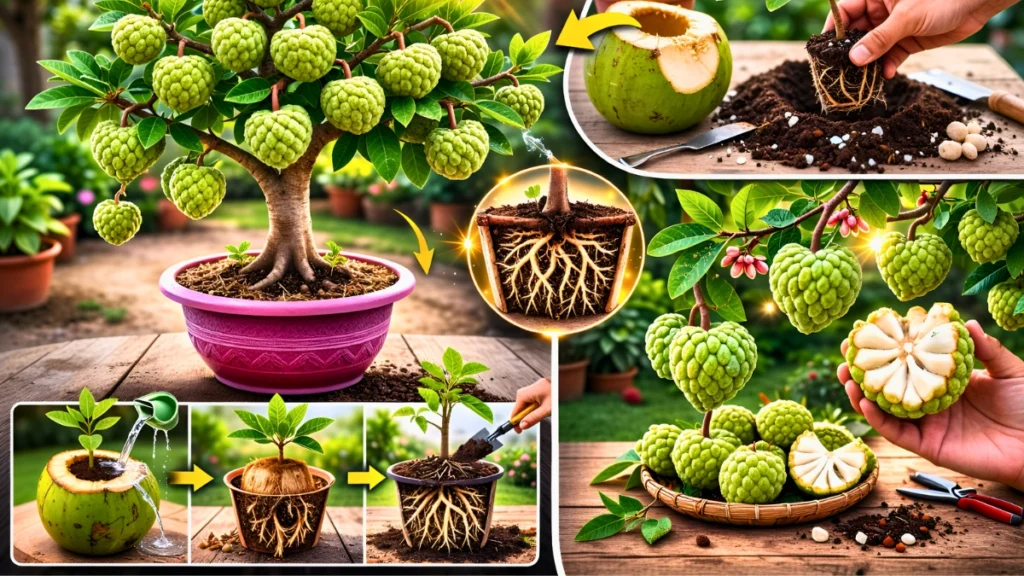
Grow Sugar Apple in 2026: Sugar apple, also known as custard apple, is gaining massive popularity among home gardeners in 2026. With rising interest in organic fruit growing and self-sufficient gardens, more people are planting this tropical delight in backyards, terraces, and even large containers. The fruit’s creamy texture and naturally sweet flavor make it a favorite in smoothies, desserts, and fresh fruit bowls. Growing sugar apple successfully, however, requires understanding its sunlight needs, soil composition, feeding schedule, and seasonal care routine.
A healthy sugar apple tree can reward you with dozens of fruits each season if you provide the right foundation. From planting depth to pollination tricks, every small step influences the final harvest. This complete expert guide explains how to grow sugar apple in 2026 using updated gardening techniques that focus on strong roots, maximum flowering, and bigger fruit size.
Choose A Sun Drenched Location
Sunlight is the most critical factor for sugar apple growth. This tropical fruit tree thrives in warm climates and requires at least six to eight hours of direct sunlight daily. Insufficient light leads to weak branches and poor fruit development. Select an open space where tall buildings or trees do not block the sun. Consistent exposure encourages stronger flowering cycles and sweeter fruit. In cooler regions, planting near a south-facing wall can increase warmth and improve productivity.
Craft The Ideal Soil Mix
Soil quality directly determines plant strength and fruit yield. Sugar apple prefers well-draining soil that does not retain excessive water. A perfect mix includes garden soil, organic compost, coco peat, and coarse sand. This blend improves aeration and prevents root rot. The soil pH should stay slightly acidic to neutral between 6.0 and 7.5. Adding vermicompost enhances microbial activity, promoting healthy root expansion. Raised beds are highly recommended if your natural soil is heavy clay.
Plant With Precision Timing
Timing plays a crucial role in successful establishment. The best planting season is early spring or the beginning of the monsoon when temperatures remain warm but not extreme. Dig a pit about two feet wide and deep to allow roots to spread easily. Mix compost thoroughly into the base soil before placing the sapling. Avoid planting during peak summer heat waves as stress can delay growth. Proper spacing between trees ensures airflow and reduces disease risks.
Select Strong Grafted Varieties
Grafted sugar apple plants produce fruit faster and more reliably than seed-grown trees. While seed plants may take four to five years to bear fruit, grafted varieties can start within two to three years. Choose saplings with healthy green leaves and sturdy stems. Inspect roots carefully to ensure there are no signs of fungal damage. Investing in high-quality grafted plants significantly increases harvest consistency and fruit size.
Water Smart Not Excessive
Water management often determines whether your plant thrives or struggles. Sugar apple does not tolerate waterlogging, yet it requires steady moisture during flowering and fruit formation. Deep watering once or twice a week is generally sufficient, depending on weather conditions. Allow the topsoil to dry slightly before the next watering cycle. Overwatering weakens roots and invites fungal diseases. Applying organic mulch around the base helps retain moisture and regulate soil temperature naturally.
Feed For Bigger Sweeter Fruits
Nutrient management directly influences fruit sweetness and size. Apply well-rotted compost every three months to maintain soil fertility. During the active growing phase, use a balanced fertilizer rich in nitrogen, phosphorus, and potassium. Once flowering begins, reduce nitrogen and increase potassium levels to enhance fruit development. Micronutrients like zinc and magnesium support leaf health and prevent yellowing. Regular feeding ensures steady growth and heavier fruit clusters.
Prune For Maximum Airflow
Pruning encourages healthy structure and better sunlight penetration. Remove weak, crossing, or diseased branches after harvest season. An open canopy allows light to reach inner branches, stimulating more flower buds. Light pruning also strengthens the framework of the tree, preventing branch breakage during heavy fruiting. Avoid aggressive cutting during active flowering. Strategic pruning not only increases yield but also improves fruit quality by promoting even ripening.
Encourage Strong Pollination Naturally
Sugar apple flowers are unique and may require assistance for better fruit set. Natural pollinators such as bees play a major role in transferring pollen. Growing flowering herbs nearby attracts beneficial insects to your garden. In areas with low pollinator activity, hand pollination can dramatically improve fruit yield. Using a soft brush during early morning hours helps transfer pollen effectively. This simple step often leads to noticeably larger harvests.
Protect Against Common Pests
Healthy trees are less vulnerable to pest attacks, but preventive care is essential. Aphids, mealybugs, and fruit borers are common threats. Spraying diluted neem oil every two weeks acts as a natural preventive measure. Regular inspection of leaves and developing fruits helps detect early infestations. Remove infected parts immediately to stop spread. Avoid overuse of chemical pesticides as they harm beneficial insects and disturb soil health.
Grow Successfully In Containers
Urban gardeners can grow sugar apple in large containers with excellent results. Choose pots at least 20 to 24 inches deep with proper drainage holes. Use a rich potting mix blended with compost and sand to ensure airflow. Container plants require slightly more frequent watering and feeding compared to ground-grown trees. Dwarf grafted varieties adapt well to terrace gardens. With proper sunlight and nutrition, container-grown trees can produce impressive yields.
Harvest At Peak Sweetness
Knowing the right harvest stage ensures maximum flavor. Sugar apples are ready when the segments on the fruit start to separate slightly and the skin color lightens. Avoid picking overly hard fruits as they may not ripen evenly. Harvest gently by hand to prevent bruising. Allow fruits to ripen at room temperature until soft. Timely harvesting supports the next flowering cycle and maintains tree health.
Seasonal Care For Long Term Success
Seasonal maintenance keeps the tree productive year after year. During winter, reduce watering frequency but do not allow the soil to become completely dry. Apply compost before the start of spring to boost new growth. Inspect for dormant pests and prune lightly before flowering begins. Protect young plants from frost in cooler climates using garden covers. Consistent seasonal attention ensures long-term fruit production.
Final Word: Grow Sugar Apple in 2026
Growing sugar apple in 2026 is a rewarding journey when guided by the right techniques. From choosing a sun-filled location to preparing nutrient-rich soil and mastering pollination methods, each step contributes to bigger harvests and sweeter fruits. With smart watering, regular feeding, and proper pruning, your custard apple tree can thrive for years. Whether planted in a backyard orchard or a spacious container, this tropical treasure delivers delicious results when cared for with patience and precision.
