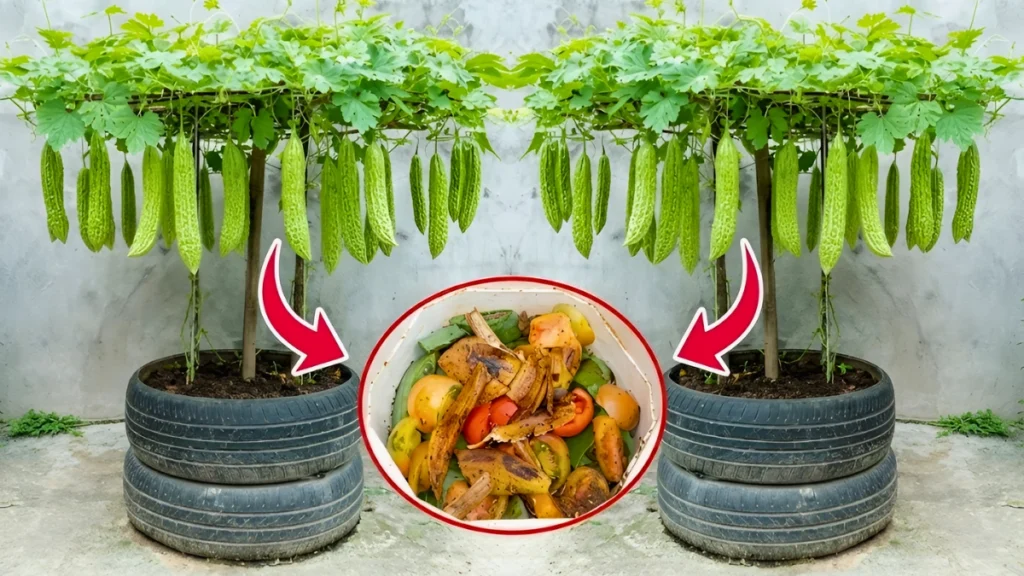
Supercharged Bitter Melon Farming 2026: Supercharged Bitter Melon Farming 2026 is redefining how growers approach high yield vegetable production. With rising land costs and increasing demand for nutrient rich produce, farmers are shifting toward innovative container based cultivation. The Smart Tire Container Technique has quickly emerged as a breakthrough method for producing extra large bitter melon fruits without expanding farmland. This approach combines sustainable recycling, controlled soil management, and precision care to deliver stronger vines, higher productivity, and better market returns in a competitive agricultural landscape.
Smart Tire Containers Deliver Giant Results
The Smart Tire Container Technique transforms discarded vehicle tires into deep, insulated growing chambers. By stacking two to three tires and filling them with layered organic soil, farmers create a micro environment that promotes strong root penetration. The rubber structure retains warmth and protects roots from sudden temperature fluctuations. This stable root zone encourages rapid vine growth, leading to thicker stems and larger fruit formation. Compared to flat ground cultivation, yields often show noticeable improvement in fruit size and uniformity.
Deep Root Power Drives Growth
Root depth is the hidden engine behind oversized bitter melons. In traditional shallow beds, roots compete for nutrients and water near the surface. Tire containers allow vertical root expansion up to twice the depth of standard soil beds. Deeper roots access stored organic matter and retain moisture for longer periods. This consistent nutrient supply strengthens plant metabolism and boosts flowering intensity. As a result, fruit development becomes more balanced, producing longer, thicker, and heavier bitter melons during peak harvest.
Precision Soil Layering Boosts Nutrition
A powerful soil blend plays a major role in this method’s success. Farmers begin with coarse organic material at the bottom for drainage, followed by compost enriched soil mixed with vermicompost, coco peat, and natural mineral additives. Each layer supports aeration and microbial activity. Beneficial microbes break down organic matter into easily absorbable nutrients. This living soil system improves nutrient uptake efficiency and keeps the plant energized throughout its growth cycle, resulting in steady fruit enlargement and improved crop quality.
Heat Retention Enhances Productivity
One unique advantage of tire containers is natural heat regulation. During daylight hours, rubber absorbs solar warmth and gradually releases it during cooler evenings. This mild thermal stability prevents stress caused by sudden temperature drops. Bitter melon vines respond positively to consistent warmth, especially during early growth stages. Enhanced root zone temperature accelerates seedling establishment and vine expansion. Farmers report earlier flowering and faster fruit maturity, allowing them to capture better market prices at the start of the season.
Vertical Trellis Maximizes Fruit Size
Bitter melon vines are natural climbers, and vertical training dramatically influences fruit shape and size. When supported by sturdy trellises above tire containers, vines grow upward in a controlled direction. This setup improves sunlight exposure and airflow around leaves. Better circulation reduces fungal risk and encourages stronger photosynthesis. Hanging fruits grow straighter and more elongated without touching the ground. The combination of vertical support and deep root nutrition leads to impressive fruit dimensions rarely achieved in conventional farming.
Smart Irrigation Prevents Overwatering
Efficient water management is essential in container farming. Drip irrigation lines fitted around tire units deliver moisture directly to the root zone. This targeted hydration avoids water stagnation and root rot. Many progressive growers now use simple moisture meters to monitor soil levels before watering. Balanced hydration prevents stress cracks in fruits and maintains consistent size development. Controlled irrigation also reduces water waste, making the technique environmentally responsible and suitable for regions facing water scarcity challenges.
Organic Protection Keeps Plants Strong
Pest and disease management in tire based farming relies on preventive care rather than chemical dependency. Elevated containers reduce soil borne pest exposure. Farmers use neem extract sprays, fermented plant solutions, and companion planting methods to deter insects naturally. Regular pruning improves airflow and eliminates infected leaves early. This proactive approach strengthens plant immunity and keeps fruit surfaces clean. Healthy vines channel more energy toward fruit growth, contributing to larger harvest volumes and superior produce quality.
Urban Growers Join the Movement
The Smart Tire Container Technique is not limited to rural farms. Urban gardeners and rooftop cultivators are adopting this method to produce fresh vegetables in limited spaces. A small terrace can accommodate multiple stacked tire units without major infrastructure changes. Because each container functions as a compact ecosystem, maintenance becomes manageable even for beginners. Urban growers enjoy fresh, chemical free bitter melons while reducing grocery expenses. This adaptability expands agricultural opportunities beyond traditional farmland boundaries.
Faster Harvest Means Higher Profit
Time efficiency plays a key role in profitability. With enhanced root warmth, optimized soil nutrition, and vertical training, bitter melon plants mature more quickly in tire containers. Harvesting often begins within fifty to fifty five days after sowing under ideal conditions. Faster crop cycles allow multiple harvest rounds within a single season. Consistent fruit sizing improves grading standards and increases acceptance in wholesale markets. The ability to produce premium grade large fruits strengthens overall farm income potential.
Sustainable Farming with Zero Waste
This technique supports environmental sustainability by recycling used tires that might otherwise become waste. Instead of discarding rubber materials, farmers convert them into productive agricultural assets. Organic soil management reduces reliance on synthetic fertilizers. Efficient irrigation conserves water resources. By combining waste reduction with increased productivity, the Smart Tire Container method represents a practical model for climate conscious farming in 2026. It proves that innovation can align profitability with environmental responsibility.
Final Word: Supercharged Bitter Melon Farming 2026
Supercharged Bitter Melon Farming 2026 highlights how thoughtful design and sustainable thinking can dramatically increase crop performance. The Smart Tire Container Technique strengthens root systems, stabilizes soil temperature, enhances nutrient absorption, and supports larger fruit development. Its affordability makes it accessible to both commercial farmers and urban growers. With rising demand for nutrient dense vegetables, this method offers a smart, future ready path toward higher yields and stronger profits. For growers seeking bigger fruits and smarter farming strategies, this innovative approach stands out as a reliable and scalable solution.
