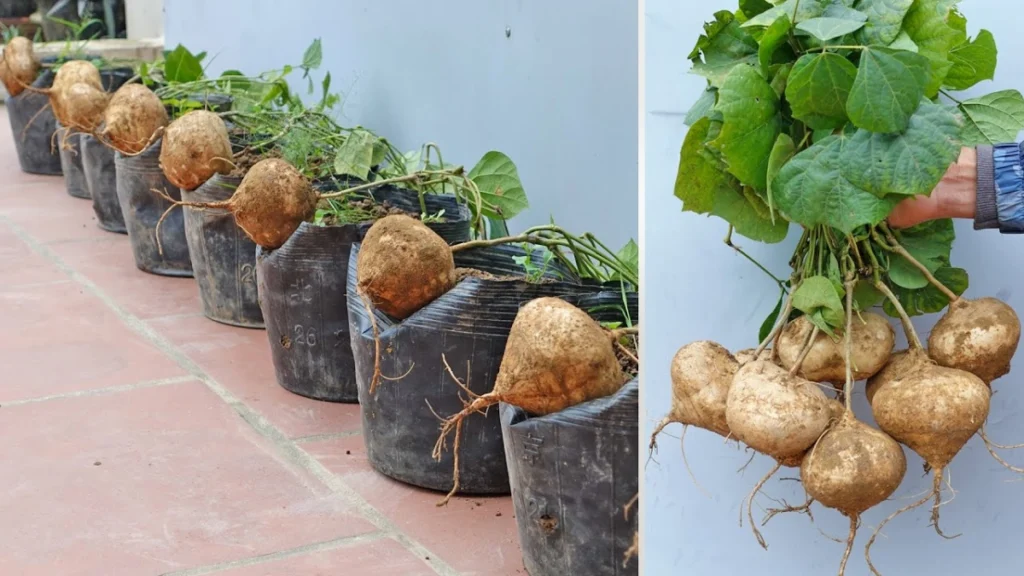
Jicama in Pots Made Easy: Jicama is quickly becoming a favorite among home gardeners who want something unique, crunchy, and rewarding to grow. Known for its crisp texture and mildly sweet flavor, this root vegetable is often seen in salads and fresh snacks. What many people do not realize is that jicama can grow successfully in containers, even in limited spaces like balconies and patios. With the right growing hacks, you can harvest large, healthy tubers right from a pot in 2026. This guide walks you through powerful, practical strategies that make container-grown jicama not only possible but highly productive.
Deep Pots Create Giant Roots
One of the most important secrets to growing jicama in pots is choosing the right container depth. Jicama develops large underground tubers that need vertical space to expand. A shallow pot restricts growth and leads to small, underdeveloped roots. For best results, use a container that is at least 20 to 24 inches deep.
Fabric grow bags are an excellent option because they promote airflow around the roots and prevent water buildup. Heavy-duty plastic or ceramic pots also work well as long as drainage holes are present. A deep container encourages straight, well-shaped tubers that are easier to harvest and more satisfying in size.
Warm Soil Speeds Growth Fast
Jicama thrives in warm conditions and struggles in cold soil. The ideal temperature range for strong growth is between 75 and 90 degrees Fahrenheit. If you plant too early in cool weather, the seeds may germinate slowly or not at all.
To boost soil warmth, place your container in a location that receives full sunlight for at least six to eight hours daily. Using dark-colored pots can help absorb and retain heat. If you live in a slightly cooler region, start seeds indoors and move them outside once night temperatures consistently stay warm. Warm soil directly supports faster vine development and healthier root formation.
Loose Soil Means Bigger Tubers
The texture of your potting mix plays a major role in tuber size. Heavy soil compresses around the roots and limits expansion. A loose, airy mixture allows jicama to grow thick, crisp tubers without resistance. Combine high-quality potting soil with compost and a portion of sand or perlite to improve drainage.
Avoid using garden soil directly from the ground, as it often becomes compacted in containers. Organic compost supplies steady nutrients, while proper aeration ensures healthy root breathing. The goal is to create soil that crumbles easily in your hand, giving tubers the freedom to expand naturally.
Prune Flowers For Root Power
Many gardeners are unaware that allowing jicama flowers to develop can reduce the size of the underground tubers. The plant diverts energy into seed production instead of root growth. Removing flowers early redirects nutrients back to the roots.
As soon as small blooms appear on the vines, pinch them off gently. This simple but powerful trick can significantly increase tuber size. It may feel unusual to remove flowers, but for container gardeners aiming for large, edible roots, this method makes a noticeable difference in harvest quality.
Train Vines Vertically Smartly
Jicama plants produce long, climbing vines that can spread quickly. In containers, uncontrolled vines can take up unnecessary space and block sunlight. Installing a trellis or vertical support keeps the plant organized and encourages efficient growth.
Training vines upward improves air circulation, reduces disease risk, and allows more sunlight to reach the leaves. Healthy leaves contribute to stronger photosynthesis, which fuels root development below the soil. Vertical training also makes your patio or balcony look neat while maximizing limited space.
Balanced Feeding Builds Strength
Feeding jicama correctly is essential for steady growth. Excess nitrogen fertilizer encourages lush leaves but smaller roots. Instead, choose a balanced organic fertilizer that supports both foliage and tuber formation.
Apply compost or a mild organic feed every few weeks during the growing season. Slow-release fertilizers work well in containers because nutrients remain available over time. Avoid overfeeding, as too many nutrients can cause leafy growth at the expense of root size. A balanced approach ensures strong vines and thick, crunchy tubers.
Smart Watering Prevents Rot
Overwatering is one of the biggest mistakes in container gardening. Jicama prefers evenly moist soil but does not tolerate soggy conditions. Always check the top inch of soil before watering. If it feels dry, water thoroughly until excess drains from the bottom.
During peak summer heat, containers dry out faster and may require more frequent watering. However, reduce watering slightly as harvest time approaches to enhance root texture and prevent splitting. Proper moisture control keeps roots firm and healthy while avoiding fungal problems.
Extended Growing Season Advantage
Jicama requires a long growing season, often four to five months, to produce mature tubers. Starting early in warm conditions gives you a strong head start. If you live in an area with shorter summers, consider using large containers that can be moved indoors during sudden cold spells.
Because containers are portable, you can shift them to protected areas when needed. This flexibility extends your growing season and ensures that tubers reach full maturity before harvest. Planning ahead allows container gardeners to match tropical crop needs even in moderate climates.
Harvest Timing Makes Difference
Patience is key when growing jicama in pots. Harvesting too early results in small, underdeveloped tubers. Watch for signs such as slightly yellowing leaves and slowed vine growth. These signals often indicate that the roots are nearing maturity.
Gently loosen the soil around the base and lift the plant carefully. Avoid pulling forcefully, as large tubers can break. After harvesting, brush off loose soil and allow roots to dry briefly before storage. Proper timing ensures maximum sweetness and crispness.
Natural Pest Protection Strategy
Although container gardening reduces many soil pests, insects like aphids can still appear on leaves. Regular inspection keeps small problems from becoming large infestations. Spraying diluted neem oil or using mild organic solutions can control pests safely.
Healthy plants grown in nutrient-rich soil are more resistant to disease. Good airflow around vertically trained vines further minimizes fungal issues. Keeping your container area clean and removing damaged leaves maintains a strong, thriving plant environment throughout the season.
Final Word: Jicama in Pots Made Easy
Growing jicama in pots in 2026 is both practical and rewarding when done correctly. Deep containers, warm soil, loose potting mix, vertical vine support, flower pruning, and balanced feeding all contribute to impressive tuber growth. With careful watering and patient harvesting, even small spaces can produce large, crunchy roots.
Container gardening offers flexibility, mobility, and control over soil quality, making it ideal for tropical crops like jicama. By following these powerful growing hacks, you can enjoy fresh, homegrown jicama straight from your balcony or patio while mastering a unique and satisfying gardening skill.
